Everything You Should Know About RFID Tags Before Buying
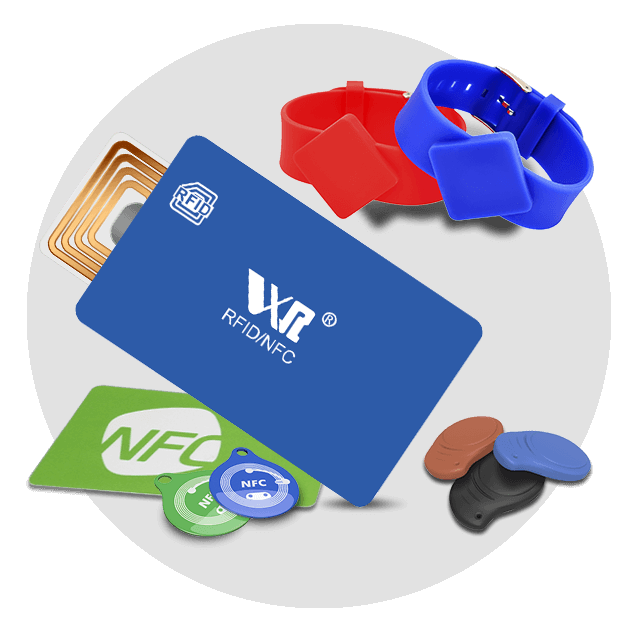
If you have been researching RFID technology for your business and finding the terminology confusing, you are not alone. Between chip types, frequency ranges, material options, and encoding services, the landscape feels complex at first glance. However, once you understand the core concepts, selecting the right RFID tags becomes a much more confident decision.
Breaking Down the Three Frequency Categories
Every RFID tag operates at a specific frequency, and that frequency determines its range, speed, and ideal application.
Low Frequency (125 kHz) tags operate at close range, typically just a few centimeters. They are less affected by liquids and metals, making them suitable for animal tracking and access control applications where the reader and tag are always in close proximity. Chips like TK4100 and EM4100 are popular in this range.
High Frequency (13.56 MHz) tags work at ranges up to about 30 centimeters and support NFC communication, which enables interaction with smartphones and dedicated readers alike. This frequency suits library management, smart payment cards, event ticketing, and any application that benefits from smartphone compatibility. NTAG213, NTAG215, NTAG216, Mifare Classic 1K, and MIFARE DESFire variants all operate in this range.
Ultra High Frequency (860 to 960 MHz) tags achieve read ranges of several meters and can be read in bulk simultaneously. Retail inventory, warehouse management, vehicle tracking, and supply chain logistics all depend on UHF performance. Chips like Alien H3, Alien H9, and Ucode 8 are established performers in this category.
The Different Physical Forms RFID Tags Take
Beyond frequency, tags come in a variety of physical forms designed for specific mounting and environmental conditions:
- Stickers and labels: Thin and adhesive-backed, ideal for applying to products, packaging, or surfaces where a low profile is needed
- Hard tags: Encapsulated in ABS or epoxy for resistance to physical damage, moisture, chemicals, and temperature extremes
- Inlays: The raw antenna and chip component that goes inside cards, wristbands, or other enclosures during the manufacturing process
- Key fobs: Compact and durable, popular for access control where users carry a small token rather than a card
RFID cards represent one of the most polished enclosure formats, combining the flat inlay inside a rigid, professional card body that works identically in readers while offering excellent visual customization options for branding and identification.
Anti-Metal Tags: Solving a Common Problem
One challenge that surprises many first-time buyers is that standard RFID tags perform poorly when mounted directly onto metal surfaces. The metal interferes with the antenna's electromagnetic field, reducing read range dramatically or preventing communication entirely. Anti-metal tags solve this with a ferrite shielding layer that isolates the antenna from the metal surface and allows normal operation even when mounted directly on steel equipment, tools, or server racks.
For industries like manufacturing, aerospace, or facilities management where assets are predominantly metal, anti-metal tags are not optional extras. They are a fundamental requirement for the system to function.
Waterproof and Specialty Material Options
Similarly, environments with moisture, chemicals, or temperature extremes require tags built for those conditions. Waterproof encapsulation protects the chip and antenna from submersion. Heat-resistant housings allow tags to survive industrial processes, sterilization cycles, or outdoor exposure in extreme climates. Chemically stable materials resist degradation from cleaning agents, solvents, and industrial fluids.
RFID wristbands in healthcare settings, for instance, must survive repeated exposure to hand sanitizers, cleaning sprays, and patient care environments without failing, which is why material selection during manufacturing directly impacts the reliability of the deployed system.
Encoding and Pre-Programming Services
A tag that leaves the factory already encoded with the correct data saves enormous time during deployment. Pre-programming involves writing the necessary identifiers, access credentials, or custom data to the chip before the tag is shipped. Memory locking prevents that data from being overwritten or tampered with after encoding. For large deployments, factory-level encoding removes a major field installation step and reduces the risk of configuration errors.
What to Ask Your Manufacturer
When sourcing RFID tags for any project, these questions are worth asking before committing to a supplier:
- Do you test 100% of tags before shipping?
- Can you pre-encode chips according to our system specifications?
- What certifications does your facility hold?
- What is your monthly production capacity?
- Can you customize shape, size, material, and printing?
- Do you support both small sample orders and mass production?
A supplier with strong answers to all six questions is one worth building a long-term relationship with. Quality, flexibility, and scale together represent the combination that serious buyers need from an RFID manufacturer.
Conclusion
RFID tags are wonderfully versatile when you understand the variables that determine their performance. Frequency, chip type, physical form, material, and encoding all work together to create a tag that either serves your application perfectly or falls short in avoidable ways. Taking the time to understand these factors before purchasing saves significant expense and frustration later, and partnering with a knowledgeable manufacturer makes that process considerably easier from start to finish.